Australia’s story has always been one of diversity, and nowhere is that more beautifully reflected than in the families who make up our communities.
From the world’s oldest continuing cultures to families formed through love across cultures, genders and sexualities, there is no single “Australian family” — and that’s something worth celebrating.
Cultural threads that shape family life
For Aboriginal and Torres Strait Islander peoples, family is deeply rooted in kinship systems.
First Nations families are far more likely to be multi-generational families. Aunties, uncles, cousins and Elders all play vital roles in raising children, passing on culture and caring for Country. These systems remind us that family can be expansive, collective and grounded in responsibility to one another.
Migration has added countless new threads to Australia’s family tapestry. Families from Europe, Asia, Africa, the Middle East and the Pacific bring traditions that shape how they care for elders, celebrate milestones and raise children. Multigenerational households, shared childcare among relatives and strong connections to community are common and enriching parts of Australian life. Many families blend cultures, creating new traditions at the dinner table, during festivals and in everyday routines.
Families formed in many ways
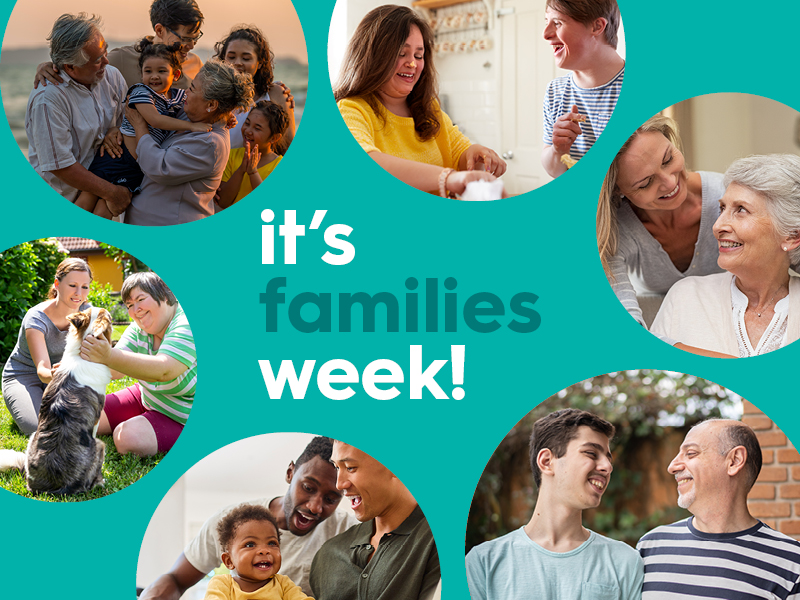
Families in Australia are formed in more ways than ever before. Some begin with marriage, some without. Some grow through birth, others through fostering, adoption or assisted reproductive technologies. Single-parent families, blended families and families led by grandparents or other carers all contribute to the strength and resilience of our society.

Importantly, many Australians find family through choice as well as biology. Friends, neighbours and community networks often step into caring roles, particularly for people who have moved far from home, experienced family rejection or simply built strong bonds outside traditional structures.
These “chosen families” are a powerful reminder that love, care and commitment are at the heart of family life.
Gender, sexuality and belonging
Families headed by lesbian, gay, bisexual, transgender and gender-diverse people are a cherished part of Australia’s communities. These families raise children, support one another, and contribute to neighbourhoods just like any other. They often model values of openness, communication and authenticity, showing that family is defined by how people care for each other rather than by rigid expectations of gender or sexuality. As at the 2021 Census, same sex families make up 0.4% of Australia’s population.
Families and caring responsibilities
Disability and ill-health is another important dimension of family life. Across Australia approximately 15% of families are living with a family member with ill-health or disability. However, we know that disability doesn’t affect all families in the same way. While 12% of couple-parent families experience ill-health or disability, that number increases to 20% for sole parent families and 29% of foster/other kin families.
For more information on carers and to access valuable resources, visit our Carers Focus Group Sharepoint page.
Strength in inclusion
What unites all Australian families is not how they were formed, who leads them or how closely they resemble old stereotypes. It is love, responsibility and the everyday work of caring for one another.
When schools, workplaces, healthcare services and communities recognise and respect diverse families, everyone benefits. Children feel seen, parents feel supported, and communities grow stronger.
Celebrating family diversity also means making room for stories that haven’t always been heard. It means listening to First Nations voices, valuing migrant experiences, respecting gender diversity and affirming all people’s right to love and form families safely and proudly.
As Australia continues to change, our understanding of family will continue to evolve. That evolution is something to embrace, not fear. Diverse families reflect the best of Australian values: fairness, mateship, respect and care for one another.
Family is where people are cared for, supported and loved. And in all its diversity, family is what makes Australia home.