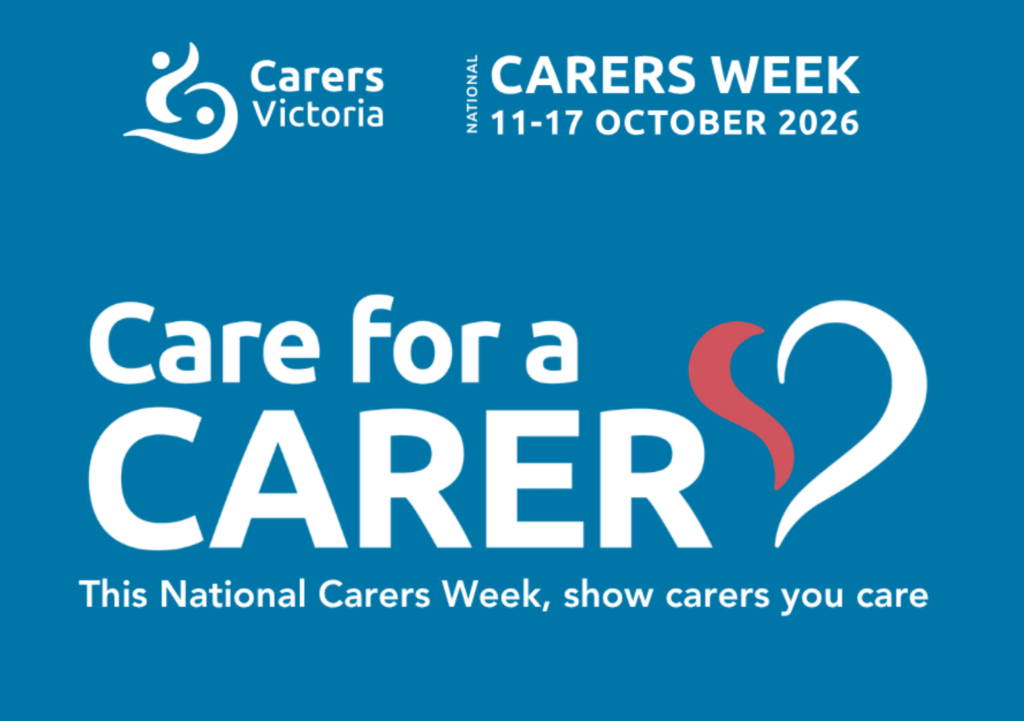
This year’s theme – Making Carers Visible – encourages all Australians to recognise, support and care for the carers in their families, workplaces and communities.
The caring you don’t always see
Across Aruma, 28% of our workforce identify themselves as carers. This can take many forms, and for Gemma, Head of Marketing at Aruma, it means raising three brilliant, funny and wonderfully individual children in a family where, as she puts it, there is “a significant amount of neurodivergent spice.”
And while Gemma wouldn’t change the people at the centre of that life, she says the caring role that comes with it can be largely invisible.
The invisible load
Behind the morning Teams smile can be a huge amount of work just getting everybody regulated, organised and out the door.
There are Occupational Therapy (OT), psychology and paediatric appointments to coordinate. There are school meetings, phone calls, check-ins, forms and emails. There is advocacy, research and planning. And there is the constant job of being a co-regulator: helping children navigate emotions and situations that can feel enormous to them, while trying to keep your own nervous system somewhere approaching calm.
“The mental and physical exhaustion of being everyone’s co-regulator is probably one of the hardest things to explain,” Gemma says. “You are trying to stay calm enough to be their safe place, even when internally you might be completely exhausted yourself.”
Then there is a particular feeling familiar to many parents and carers.
“You’re in the middle of an important meeting, your phone rings, you glance down and see the school’s name. Your stomach just lurches.
“You know you’re probably about to hear about another tricky situation. You take the call, work out what has happened, advocate where you need to, help resolve it, make sure your child is okay, and then somehow switch your brain back and carry on with your working day.”
And the familiarity of that feeling is what makes the unexpected good phone calls extraordinarily special.
“When somebody calls just to tell you something wonderful your child has done, honestly, there’s nothing better.”
Finding the things that hold you up
When caring starts to feel overwhelming, Gemma says she has learned the importance of building her own support pillars rather than waiting until she has nothing left to give.
One has been Carer Gateway, where she has accessed practical help with housework and cleaning as well as six sessions with a counsellor.
Another has been finding other parents who simply get it.
“There is something incredibly therapeutic about sitting with another parent and not having to explain the backstory. They understand why something seemingly tiny is actually huge, why you’re exhausted, or why something that happened at school has knocked you sideways.”
A local Northern Beaches Facebook community for parents of neurodivergent children has also become a valuable source of recommendations, advice and reassurance.
Professional support has been critical too. Her eldest’s NDIS plan enables the family to access his occupational therapist and psychologist, who have become an important part of the team around him, helping him develop the skills and support he needs to continue growing and succeeding at school.
And then there are the things Gemma has learned she needs for herself.
“I need to move my body. An hour in the gym can work miracles for clearing my head and regulating me so I can take on the rest of the day.
“And I’ve learned that I need tiny pockets of time where nobody needs anything from me. They don’t have to be big or glamorous. Sometimes you just need a little space where you’re not somebody’s mum, advocate, co-regulator, problem solver or work colleague. You’re just you.”
Seeking a compassion-first approach
Gemma says being in a role she finds purposeful and connected to, makes working an important and positive part of her life.
It has also made Gemma conscious of something we can all offer each other, regardless of whether we identify as carers: compassion.
“Behind the smile on somebody’s camera, you really have no idea what their morning looked like before they joined your meeting.”
“They might have spent an hour helping a child regulate, had a difficult phone call about an ageing parent, been awake half the night caring for somebody, or be quietly worrying about something happening at home.”
“A compassion-first approach costs us nothing. Sometimes plans need to change. Sometimes somebody needs a little flexibility. Sometimes what they really need is for another person to say, ‘Yep, I understand. Do what you need to do.”
And amongst all the chaos, a lot of love
For all the appointments, advocacy, exhaustion and occasional chaos, Gemma is clear that this isn’t a story about what is wrong with family life.
It’s a story about three children she adores. “Our family can be loud, chaotic, hilarious, exhausting and completely wonderful, often within the same five minutes.
“Being their mum has taught me more about resilience, empathy, difference and unconditional love than anything else in my life. I wish I could make the world easier for them, but I can’t. I can keep advocating for them, celebrating exactly who they are and making sure home is always the place where they are completely understood and completely loved.”
And for other carers who recognise themselves somewhere in her story, Gemma’s message is simple: find your pillars.
Find the people who understand. Accept practical help. Make time, however small, to look after your own nervous system. And remember that you don’t have to wait until everything feels impossible before reaching out.
Because caring might sometimes be invisible. But the people doing it shouldn’t have to feel invisible too.
For more information, resources and tips visit National Carers Week | 11 – 17 October 2026