In January, we announced Aruma had received a National Centre of Excellence in Intellectual Disability Health (NCEIDH) grant to develop a suite of micro‑learning modules focused on preventive health.
The project is well underway to deliver 18 accessible e-learning modules, each featuring short, animated videos, designed for three different groups:
- people with intellectual disability (PWID)
- disability support workers and
- families/carers of PWID.
To make sure the content is effective, the project team has committed to genuine codesign by centring lived experience. From the beginning, Aruma has ensured that people with lived experience are not just participants, but leaders in the development of the learning content.
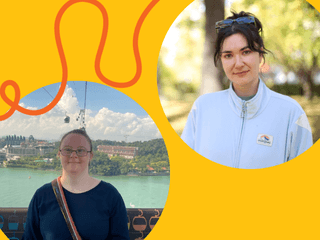
Lucy Bobby‑Joy (Policy & Clinical Governance Coordinator) and Ruth Faragher (Project Coordinator) are coordinating the development of the project. Ruth has Down Syndrome and brings lived experience expertise to the role.
The pair have met weekly since September 2025 to shape each stage of the learning content together, from scripting and storyboarding to Easy English review and voice-over recording.
Lucy said, “Codesign is not an optional step, it’s a core principle of creating meaningful, impactful learning for people with intellectual disability.”
Ruth agrees, “it’s good to have people with disability work on creating videos for people with disability.”
She is also very encouraging of others participating in the codesign process, “I think other people with disability would be good at this work.”
A highlight for Ruth is the creative aspects of the project, “I like making animated videos. “Recording my voice is my favourite job. And also writing comments on the Easy English documents. I like helping people learn about going to the doctor.”
Ruth and Lucy both hope that the learning content will empower people with intellectual disability to make their own health choices.
“A core aim of the project is to ensure people with intellectual disability have access to health information that is clear, respectful, and genuinely useful for making everyday choices,” said Lucy.
One of the strongest messages from the codesign process is the importance of autonomy.
Ruth says that sometimes people with intellectual disability are not supported to make their own choices about health, “Some parents don’t want to listen… They still should. I think people should make their own choices if they are given the information. They are adults — they need to make their own decisions.”
The modules created through this project aim to give people the knowledge and confidence to do exactly that, understand their health, navigate healthcare systems, and make informed decisions as adults.
With testing scheduled to begin in March, before being released to the public in the latter half of the year, the project is set to make a meaningful contribution to health equity for people with intellectual disability across Australia.